Selling a house in autumn: is it really a good time?
Is selling your house in autumn a good idea? Discover the advantages of this season and our ...


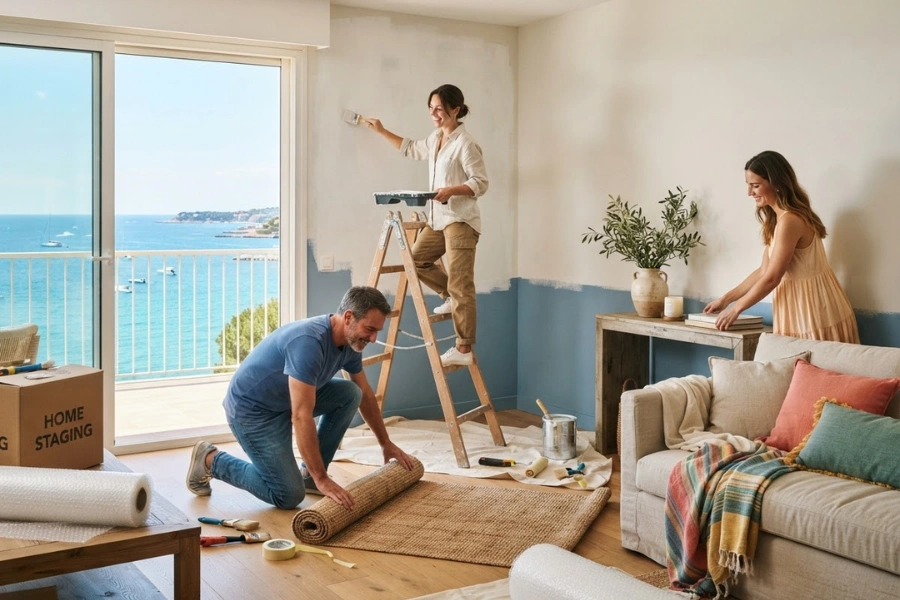
On a property portal such as Mer et Demeures, discovering a home most often begins with its listing and photographs. How a property is presented therefore plays an important role in attracting attention, encouraging prospective buyers to view the listing and ultimately prompting a viewing. According to the 2025 National Association of Realtors (NAR) study, in the United States, 73% of buyer agents consider photographs particularly important to their clients.
It is precisely this first impression that home staging seeks to improve. The aim is not to transform a property completely or decorate it according to the owner's personal tastes. Instead, it is about highlighting its strengths, proportions and layout possibilities to help buyers imagine themselves living there. Originating in the United States more than fifty years ago, the method is now used across many property markets.
1. What is home staging?
2. From an American concept to an international property marketing tool
3. Does home staging really help sell a property faster?
4. How much does home staging cost and what return on investment can you expect?
5. How to successfully stage a house or apartment
6. Virtual home staging and AI: how far should you go?
FAQ: everything you need to know about home staging when selling a property
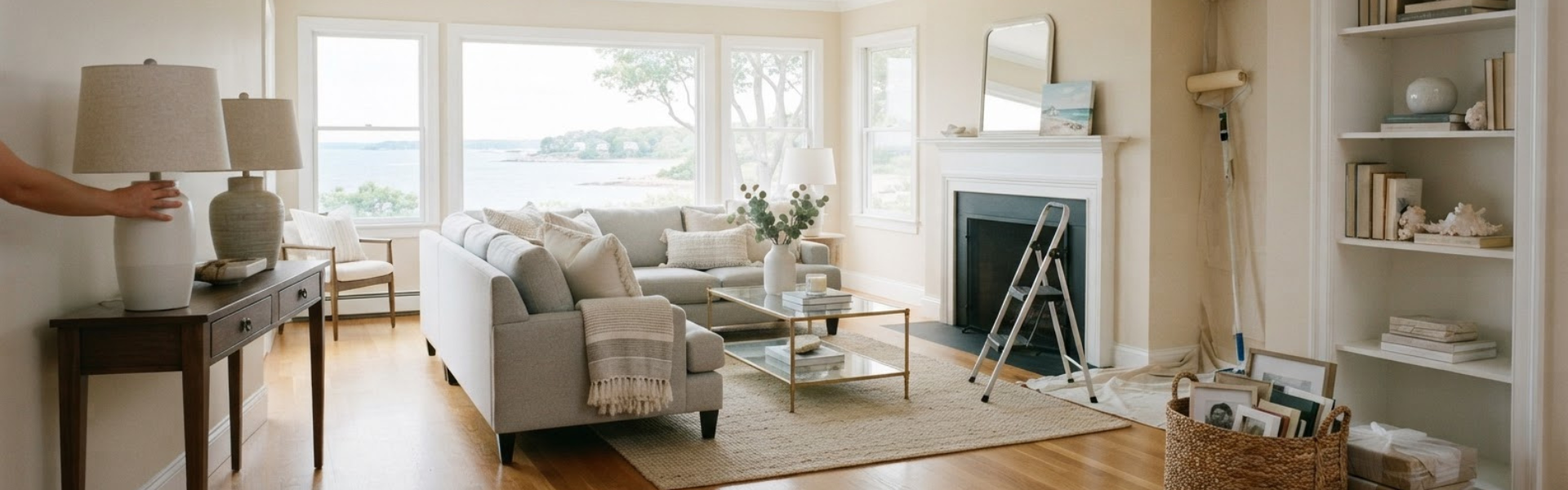
Home staging involves preparing and presenting a property for sale in the best possible way. This can include decluttering rooms, rearranging furniture, carrying out minor repairs, improving lighting, choosing more neutral colours or temporarily adding decorative elements.
It therefore differs from interior design. An interior designer generally aims to create a space that reflects the tastes and lifestyle of its occupants. A home stager has a different priority: making the property easy to understand and appealing to the widest possible range of prospective buyers.
Home staging does not replace the other steps required to prepare a property properly for sale. An electrical system that needs upgrading, a damaged roof or a damp problem will obviously not disappear with a few cushions and a new light fitting. Home staging mainly acts on how spaces are perceived and on defects that can be easily corrected.
This explains why the most common improvements remain relatively straightforward. In its 2025 survey, the NAR reports that 91% of seller agents surveyed recommend decluttering the property, 88% recommend thoroughly cleaning it and 77% advise improving its exterior appearance.
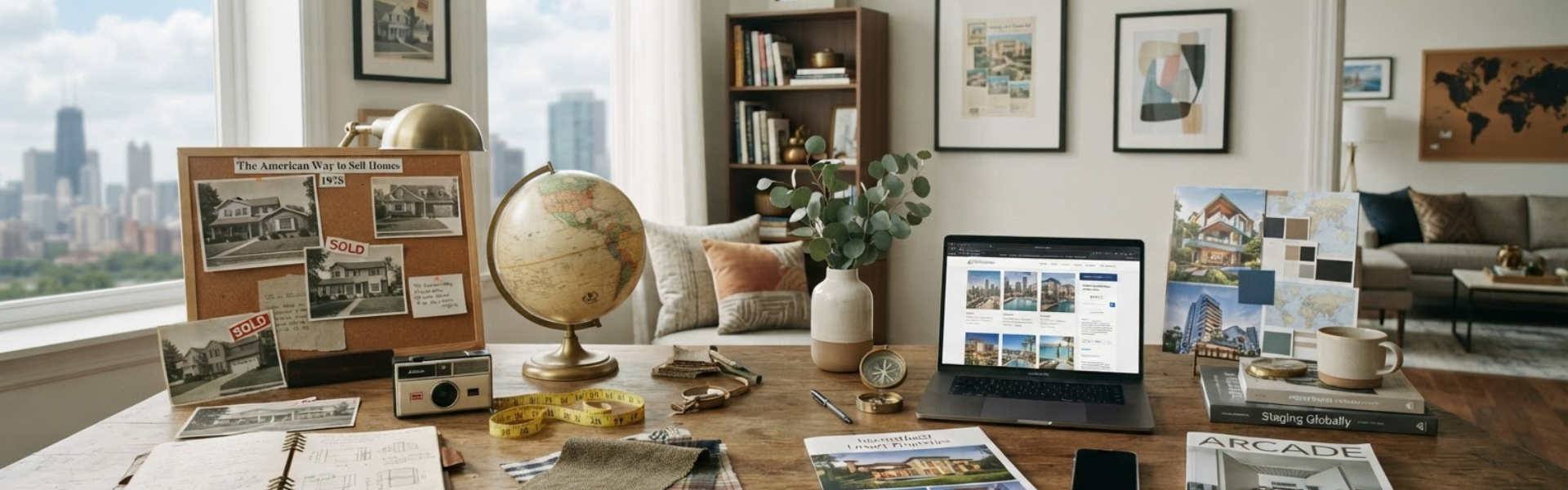
The history of home staging began in the United States in the 1970s. Real estate agent Barb Schwarz adapted the principle of theatrical staging to residential property: preparing a house before putting it on the market in order to reveal its potential to prospective buyers. She popularised this approach under the name “home staging”.
The practice gradually became more professional. In 1999, the International Association of Home Staging Professionals (IAHSP) was founded, describing itself as the first professional organisation devoted exclusively to the industry.
The concept subsequently spread widely across Europe. In 2012, the Associazione Professionisti Home Staging Italia was founded in Italy, while the United Kingdom and Ireland have had their own Home Staging Association since 2018.
The growth of online property portals has also increased the importance of presenting a home effectively. Buyers can now compare dozens of houses and apartments within minutes, sometimes across several countries. For international buyers making an initial selection remotely, the quality of the photographs and the clarity of the spaces are therefore particularly important.
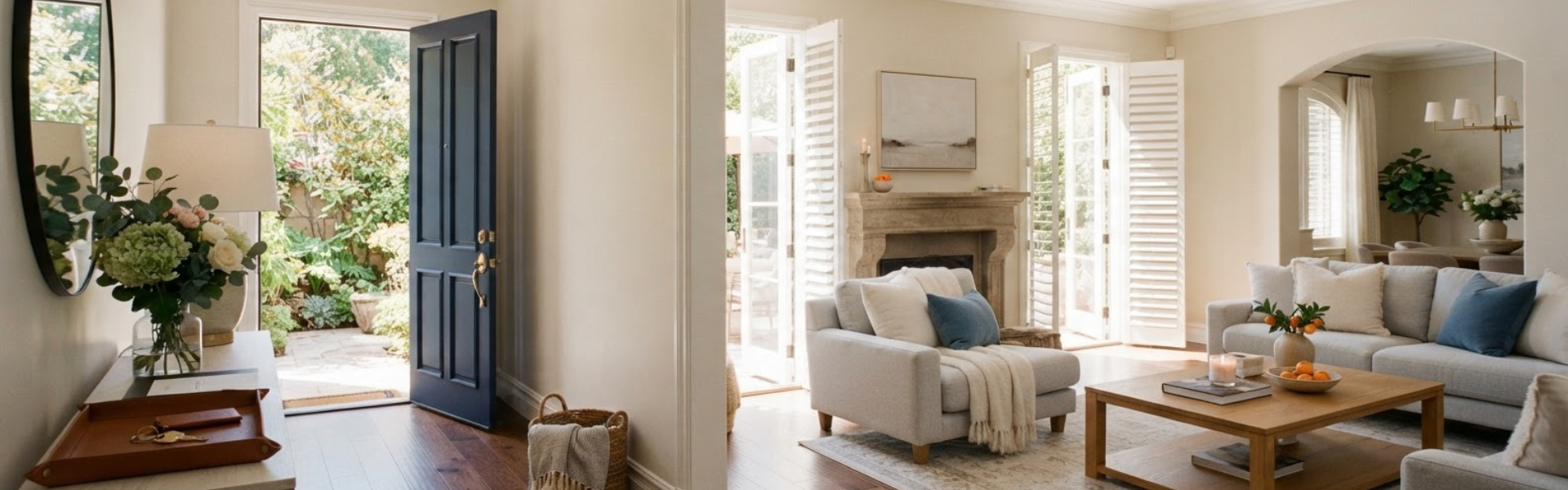
Available studies show positive effects, although with one important qualification: home staging does not guarantee either a higher sale price or a quick sale. Several professional surveys nevertheless suggest that it can influence buyers' perception of a property, the offers received and the length of time it remains on the market.
The NAR's 2025 study is one of the most extensively documented sources available. Conducted among 1,266 US real estate professionals, it found that 83% of buyer agents believe home staging makes it easier for their clients to imagine the property as their future home. Among the seller agents surveyed, 49% reported that home staging reduced the time a property spent on the market.
As regards price, 29% of the professionals surveyed reported seeing offers increase in value by between 1% and 10%.
European professional associations also publish their own figures. In Italy, the country's two national industry associations reported, for their 2024 reference period, an average time on the market of 35 days for staged properties, a 93% sale rate and an average price reduction of 3%.
In Spain, a survey by the Asociación Home Staging España also shows that the practice is not restricted to luxury property: 53% of projects carried out in 2023 by the professionals surveyed involved homes valued between €150,000 and €300,000.
Beyond the figures, the objective remains straightforward: present the property more effectively, make the listing more appealing and remove potential obstacles before a viewing or negotiation.

The cost varies considerably depending on the property and the type of work involved. It may be limited to a few purchases when the owner carries out most of the work themselves, or it may include the services of a professional, furniture hire, accessories, minor repairs and professional photography.
In the United States, the NAR survey puts the median cost of professional home staging at $1,500, compared with $500 when the real estate agent handles the staging themselves.
In France, the budget devoted to home staging is generally between 1% and 3% of the property's value, depending on the extent of the work involved.
The aim is not necessarily to spend up to this threshold, but rather to prioritise the most visible improvements without incurring disproportionate costs.
It would be misleading to claim that spending €2,000 on home staging will automatically allow a property to sell for €5,000, €10,000 or €20,000 more.
However, its economic value can take several forms:
• Reduce the time the property remains on the market;
• Attract more genuinely interested prospective buyers;
• Potentially reduce the scope for price negotiation;
• Avoid a much larger price reduction after several months without a sale.
Home staging should therefore primarily be viewed as a marketing expense rather than a way of mechanically increasing a property's value.
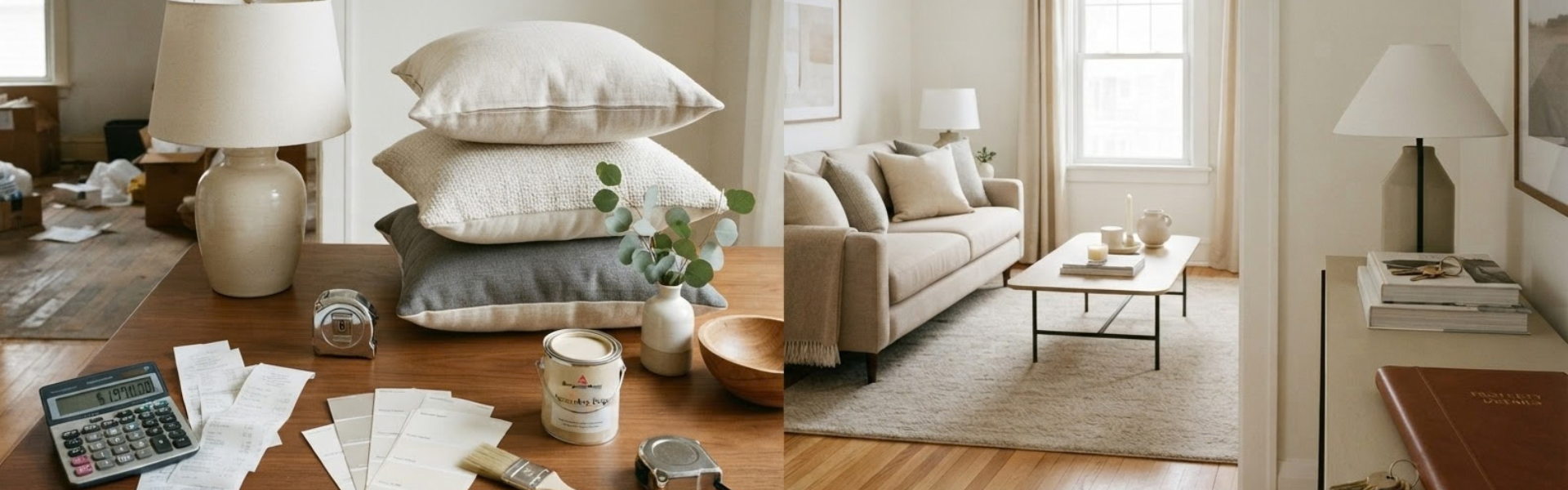
The essential rule is simple: highlight the property without trying to turn it into a magazine interior. Buyers should be able to understand the spaces quickly and imagine their own life in the home.
Declutter before decorating. Adding more accessories is not the priority. Removing certain pieces of furniture or objects can instead open up sightlines and improve circulation within a room.
Depersonalise without making the property feel cold. Collections, large numbers of personal photographs or highly distinctive décor can distract buyers. A few warm touches are nevertheless useful to avoid creating a completely impersonal atmosphere.
Fix minor defects. A broken handle, missing light bulb, stained wall or heavily discoloured sealant can make a property appear less well maintained than it really is. Minor repairs should therefore be among the first improvements considered.
Work on the lighting. Cleaning windows, clearing openings, replacing weak lighting or repositioning certain pieces of furniture can transform the perception of a room without major work. The season also matters when presenting a property. Natural light, artificial lighting and atmosphere require particular attention when, for example, preparing a property for an autumn sale.
Give every space a clear purpose. A small, cluttered bedroom serving simultaneously as an office, storage room and gym can be difficult to understand in a photograph. It is better to give it one main, immediately identifiable function.
Do not overlook outdoor spaces. For a coastal home, holiday property or villa with a swimming pool, outdoor areas are often among the first purchasing criteria. Terraces, gardens, balconies, swimming pools and views therefore deserve the same attention as the living room or kitchen. A dining area arranged on a terrace, a few seats facing the sea or a well-maintained pool area help buyers understand how these spaces can be used. These features also play an important role in presenting coastal homes for sale in France.
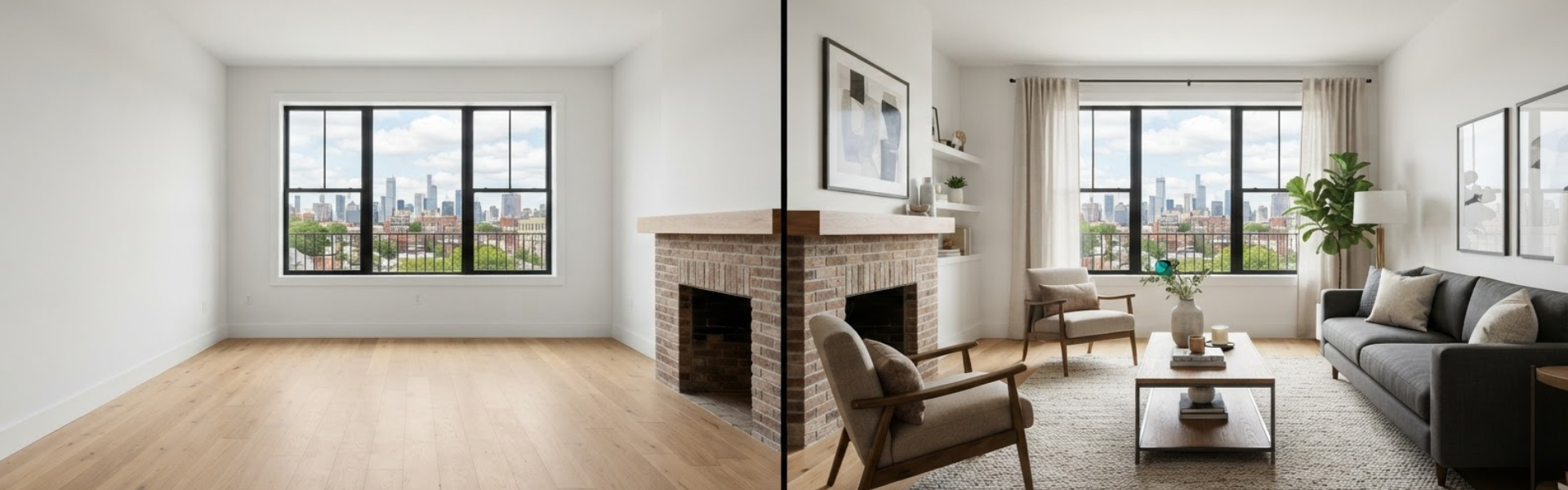
Home staging can now be partly or entirely digital. Virtual home staging, or virtual staging, can for example involve digitally adding furniture to a photograph of an empty apartment to help buyers understand the proportions of the rooms and their furnishing possibilities.
AI image-generation tools make this type of visualisation even easier. They can be used to test several interior styles or demonstrate how a room could be used without physically moving furniture.
Digital tools do not necessarily replace traditional home staging, however. In the NAR 2025 survey, seller agents placed greater importance on photography and physical staging than on virtual staging. According to 34% of them, virtual staging is less important to their clients.
Furthermore, an edited image must remain a faithful representation of the property. Virtually adding a sofa to an empty living room suggests a possible layout. Altering the view, removing a structural defect or adding a feature that does not exist, on the other hand, amounts to a misleading representation of the property.
Whether physical or digital, home staging therefore works best when it remains true to its original purpose: revealing a property's potential rather than inventing qualities it does not have.
Home staging involves preparing and enhancing a property before it is sold in order to improve its presentation and help prospective buyers imagine themselves living there.
Interior design reflects the tastes of the occupants. Home staging, by contrast, aims to make the property attractive to the widest possible range of prospective buyers.
It can contribute to a faster sale, although there is no guarantee. In the 2025 NAR study, 49% of the seller agents surveyed said they had observed a reduction in time on the market.
Not necessarily. It can, however, help support the asking price and potentially reduce the amount of negotiation.
Costs depend on the property and the extent of the work involved. In France, the budget is generally around 1% to 3% of the property's value.
Yes. Decluttering, cleaning, carrying out minor repairs, improving the lighting and rearranging furniture are already effective measures.
Virtual home staging involves digitally furnishing or enhancing photographs of a property, particularly when it is empty, in order to demonstrate possible layouts.
Looking to sell a property near the sea? Publish your property listing on Mer et Demeures and gain visibility among buyers in France and internationally.
You may also be interested in these articles:
Sell your house in autumn: is it the right time?
How to prepare your property for sale and sell successfully