How much does it cost to live in Greece? How should you plan your move abroad and choose where to settle? Here is what you need to know before leaving.
Living by the sea in Crete, enjoying retirement in the Peloponnese or pursuing a career in Athens: there are plenty of reasons to move to Greece. However, exploring the country on holiday and making it your permanent home raise very different considerations.
While freedom of movement within the European Union makes relocation easier for many expats, several aspects deserve careful consideration before departure. From monthly expenses and residency requirements to taxation and housing, here is what you need to know about living in Greece all year round.
1. Moving to Greece: residency requirements
2. How much does it cost to live in Greece?
3. Working or retiring in Greece
4. Healthcare, education and everyday life
5. Where to live in Greece all year round?
6. Buying or renting a property in Greece
FAQ: Living in Greece

1. Moving to Greece: residency requirements
Citizens of the European Union, the European Economic Area and Switzerland can move to Greece without a visa or work permit. A valid identity card or passport is sufficient for stays of up to three months. Beyond this period, residents must register with the relevant police authorities. Those who are not in employment must provide evidence of sufficient financial resources and health insurance coverage.
Several other formalities should also be considered:
- Obtain a Greek tax identification number (AFM), required for many administrative, financial and property-related procedures.
- Obtain a social security number (AMKA), which, depending on your circumstances, is necessary to work and access the Greek social security system.
- Open a bank account to manage everyday expenses and local direct debits.
- Find out about your tax status.
Nationals of countries outside the European Union must obtain a residence permit appropriate to their circumstances: employment, education, family reunification or another authorised purpose.
Before departure, it is therefore advisable to prepare identity documents, proof of financial resources, health insurance certificates and, depending on individual circumstances, employment or family-related documents.

2. How much does it cost to live in Greece?
According to the
Hellenic Statistical Authority (ELSTAT), average monthly expenditure in 2025 amounted to nearly
€1,600 for a single person under 65, €830 for a single person aged 65 or over and €1,621 for a couple.
However, the cost of living varies from one region to another. In Athens, popular seaside resorts and certain tourist islands, everyday expenses can quickly add up. Smaller towns and inland villages often offer a more affordable lifestyle.
If you are considering renting before buying, expect to pay around €660 per month for a one-bedroom apartment in central Athens and €560 outside the city centre, according to
Numbeo data (November 2026).
Homeowners, meanwhile, must budget for property taxes, running costs and home maintenance. These expenses should be factored into any property purchase, along with relocation costs.
Thinking of becoming a homeowner? Discover the
tax benefits and incentives to consider when buying a house in Greece.

3. Working or retiring in Greece
To attract new workers, Greece has introduced a tax scheme offering eligible individuals a
50% income tax exemption on Greek-source employment or business income for seven years.
Employees living in Greece and working remotely for a foreign company are generally taxed in their country of tax residence when their duties are performed there. This is notably provided for under Article 14 of the
Franco-Greek tax treaty of 11 May 2022. In 2026, Greece's progressive income tax rates range from 9% to 44%, excluding specific tax relief measures.
Retirees can generally continue receiving their pensions after relocating. Those who meet the eligibility criteria for Greece's foreign pension tax scheme may benefit from a
7% tax rate on their foreign-source income for fifteen years, subject to applicable tax treaties.
Further details on how these tax schemes operate are available on the website of the
Greek tax authority (AADE).

4. Healthcare, education and everyday life: preparing for your arrival
Healthcare. Greece has a combination of public hospitals, healthcare centres and private medical facilities. Health insurance coverage for expats depends on their employment status and social security affiliation. In 2023, Greek households directly financed 34% of the country's healthcare expenditure, according to the
OECD. Supplementary health insurance may therefore be worthwhile. The official
Your Europe portal provides European expats with information about their rights.
Education. Schooling in Greece is compulsory between the ages of 4 and 15. Expat children can attend a state school, where lessons are taught in Greek, or enrol in a private or international school. The latter are mainly located in major urban areas, particularly Athens and Thessaloniki. The European
EURES portal explains how the Greek education system operates.
Everyday life. Although English is widely spoken in major cities and tourist areas, a basic knowledge of Greek makes communication easier, particularly in villages. Internet connectivity is another important consideration for remote workers. In 2024, 46.1% of Greek households were covered by a very high capacity fixed network, according to
Eurostat. Make sure to check the quality of the connection at the address where you intend to live.
5. Where to live in Greece all year round?
Athens and Attica offer a wide range of services, international schools and transport infrastructure. South of the capital, the Athens Riviera combines city living with easy access to the coast.
Houses and apartments for sale in Attica
Unlike some smaller tourist islands,
Crete has several major towns and cities that remain active throughout the year. Heraklion, Chania and Rethymno provide access to healthcare, shops and transport connections to the mainland.
Houses and apartments for sale in Crete
As Greece's second-largest city,
Thessaloniki offers an alternative to Athens for those who enjoy urban life. Its geographical location also provides easy access to the beaches of the Halkidiki peninsula.
Property for sale in Central Macedonia
For those who prefer living near the sea without the constraints of island life, the
Peloponnese is well worth considering. Kalamata and Nafplio, in particular, offer a coastal lifestyle while remaining connected to the mainland road network.
Houses and apartments for sale in the Peloponnese
Finally, before choosing one of the
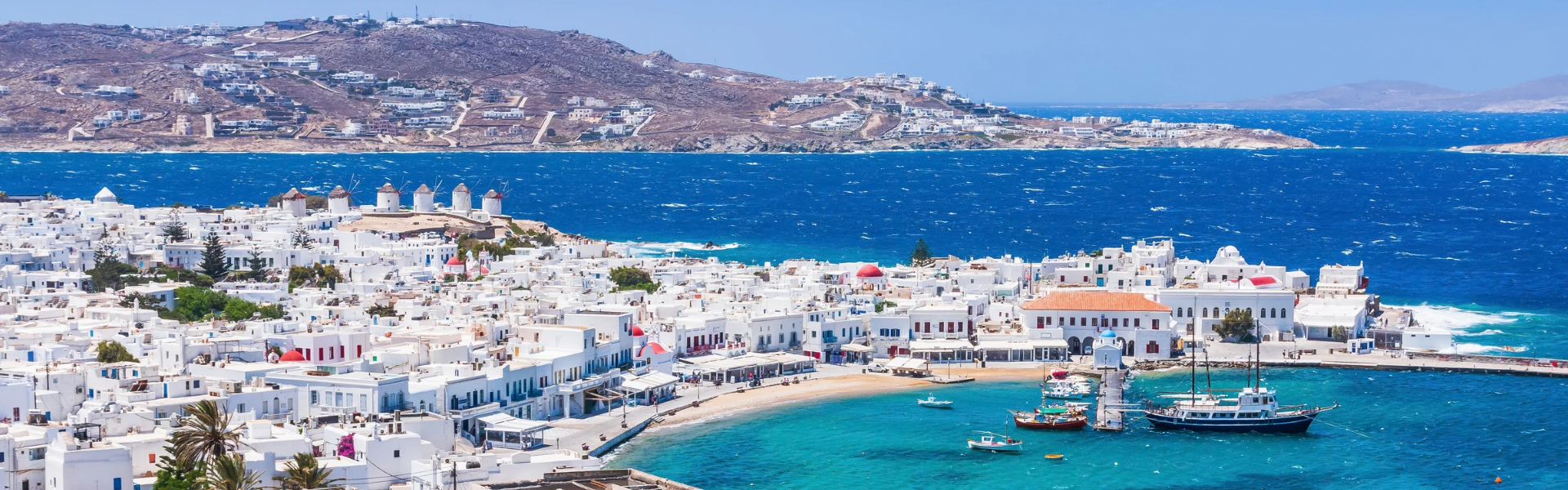
Greek islands, look into winter ferry schedules, access to healthcare and which shops remain open throughout the year. Spending time there outside the tourist season is an opportunity to discover a different side of the destination.
To explore the diversity of the country's landscapes, discover our
selection of ten destinations in Greece.

6. Buying or renting a property in Greece
Renting for a few months before buying allows you to become familiar with your future neighbourhood and assess whether it meets your everyday needs. In tourist destinations, make sure your rental agreement covers the entire year.
If you are planning to buy a property, do not base your decision solely on its location or sea view. When choosing a primary residence, also assess the quality of the insulation, heating and air conditioning systems, the building's orientation and accessibility. In coastal areas, the maintenance of windows, doors and metal fittings exposed to sea spray also deserves particular attention.
Discover the different stages of purchasing property in our
practical guide to buying a house in Greece.

FAQ: Living in Greece
Is it easy to move to Greece as a foreigner?
Citizens of the European Union, the European Economic Area and Switzerland do not need a visa. For stays exceeding three months, they must register their residence with the Greek authorities and meet the applicable residency requirements. Nationals of other countries generally need to obtain a residence permit appropriate to their circumstances.
How much money do you need per month to live in Greece?
For a single person, an estimated monthly budget of €1,200 to €1,500, including accommodation, provides a starting point for planning expenses in 2026. The actual amount depends largely on the location, rent and individual spending habits.
Can you live in Greece all year round?
Yes, although everyday life can differ considerably between summer and winter. On certain tourist islands, ferry services become less frequent and some shops and restaurants close during the off-season.
Can foreigners retire in Greece?
Yes. Foreign retirees can generally continue receiving their pensions in Greece. The country also offers a tax scheme under which eligible individuals may benefit from a 7% tax rate on foreign-source income for fifteen years, subject to applicable tax treaties.
Do you need to speak Greek to live in Greece?
Fluency in Greek is not essential when moving to the country. English is widely spoken in major cities and tourist areas, but is less common in rural locations. Learning the local language makes administrative procedures and everyday interactions easier.
Does buying a property in Greece give you the right to residency?
Purchasing real estate in Greece does not automatically grant residency rights. European Union citizens benefit from freedom of movement, while nationals of other countries must hold an appropriate residency status. Certain non-European investors may qualify for the Golden Visa programme, subject to specific conditions.
Buying an island in Greece: everything you need to know
Buying property in Crete: why the island attracts foreign investors
Buying a house in Greece: opportunities and tax benefits to know about