Second home: how to prepare your property for winter?
How should you prepare your holiday home for winter? Frost, humidity, heating, roofing and ...


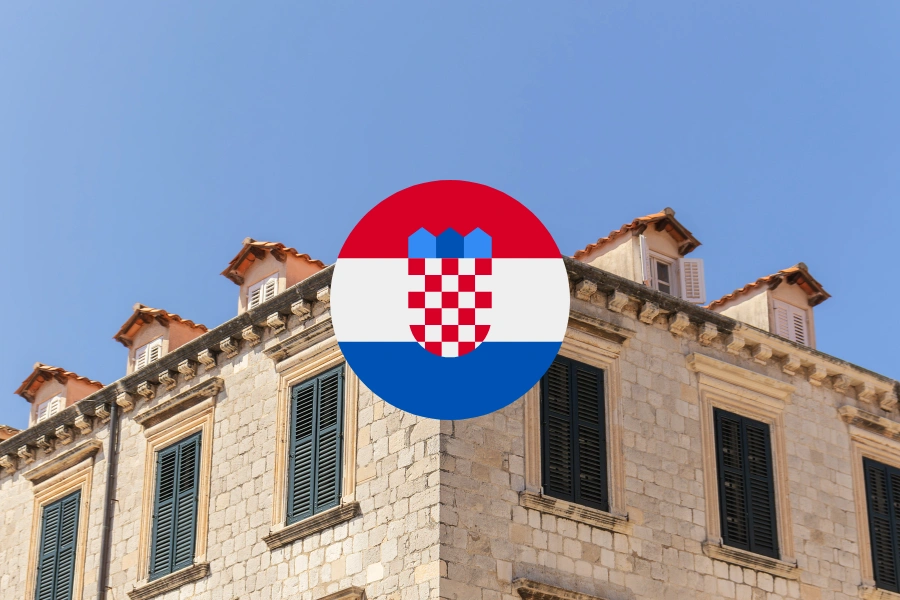
To understand Croatian architecture is to grasp what makes the country’s homes so distinctive. Authentic, bright, and always in harmony with their surroundings, they appeal as much to travelers as to those dreaming of investing there.
From Dalmatia to the Adriatic islands, stone, wood, and sea create a unique style where every detail reflects the Mediterranean art of living.
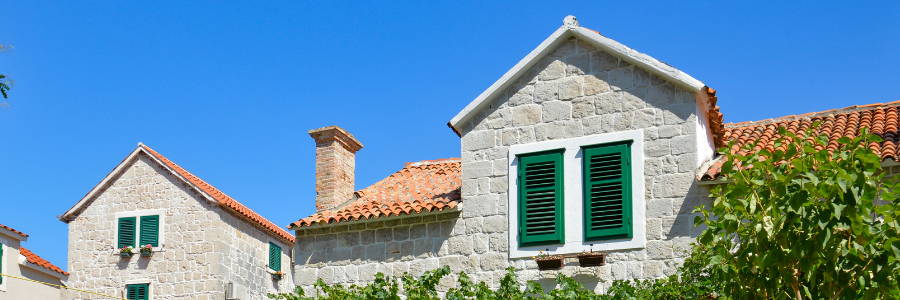
Croatian architecture mirrors a land of many faces. Along the Adriatic coast, Venetian and Roman influences blend with deeply rooted local traditions. In the hilltop villages of Istria, limestone houses recall Tuscany, while on the Dalmatian islands, golden stone glows under the sun and red-tiled roofs overlook the sea.
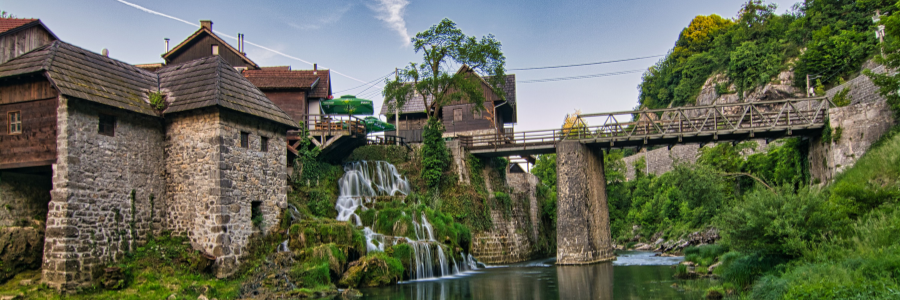
Further inland, the scenery changes: the forests of Slavonia and Lika inspired a wooden architecture — robust yet warm. These contrasts reveal Croatia’s dual identity: Mediterranean on the coast, Alpine and continental in the mountains.
On the coast and the islands, stone is everywhere. Locally quarried, it covers façades, forms stairs, walls, and sometimes even roofs. Croatian houses — especially Dalmatian homes — stand out for their elegant simplicity: thick walls to keep interiors cool, small windows to block the wind, and cobbled courtyards paved with pebbles.
In Trogir, Split, or Korčula, these buildings tell centuries of history, between Venetian heritage and artisanal craftsmanship. Carefully restored, they retain their original charm while offering the modern comfort international buyers are looking for.
In the northern and eastern areas — such as Slavonia or Zagreb County — the harsher climate gave rise to a different aesthetic. Traditional houses here are built from solid wood, often adorned with floral carvings or painted patterns. Their steep roofs shed snow easily, while covered porches and balconies invite residents to enjoy the surrounding nature.
This rural and mountain heritage now inspires many modern eco-houses, where wood is making a comeback for its authenticity and sustainability.
Recognizing traditional Croatian house architecture also means noticing its distinctive details: colorful shutters, arched windows, flowered courtyards, and the famous konoba — a vaulted cellar once used to store wine and olive oil. These cool, convivial spaces are now transformed into summer kitchens or open garden lounges.
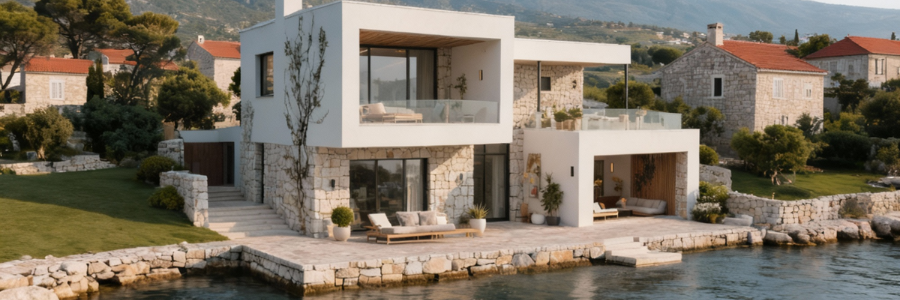
While traditional houses continue to captivate, contemporary Croatia is reinventing its architecture. On the heights of Hvar, in Poreč, or along the Makarska Riviera, modern villas reinterpret Mediterranean codes — natural stone, light wood, flat roofs, large bay windows — adapting them to a sleek, sustainable design.
Eco-construction is gaining ground: hemp insulation, natural ventilation, rainwater harvesting. This evolution reflects a strong trend in the Croatian real estate market — combining modern comfort with respect for heritage.
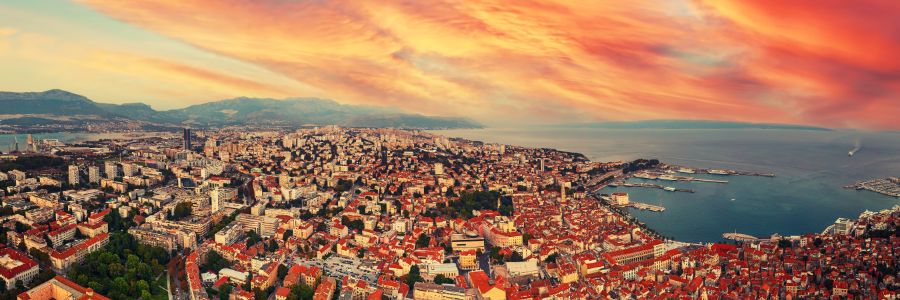
In Istria, hilltop villages such as Motovun or Grožnjan reveal timeless charm amid green hills and cobbled lanes. Houses display stone façades and colorful shutters, testifying to the region’s Italian-Croatian past.
Buy a house in Istria
In Dalmatia, architecture takes on a maritime flair: pale façades, open loggias facing the sea, and exterior stone staircases. Split, Dubrovnik, and Hvar are true open-air museums.
Buy a house in Dalmatia
Finally, in the Primorje-Gorski Kotar region, stone-and-wood chalets evoke the Alps — but with an Adriatic touch. This regional diversity makes Croatia a fascinating destination for architecture lovers and investors seeking authenticity.
Buy a house in Primorje-Gorski Kotar
Buying a traditional Croatian house, whether in stone or classic construction, means owning a piece of history. These properties have strong value potential, especially in tourist areas and regions most sought-after by buyers.
Prices vary by region: around €2,500/m² in Istria, €4,000/m² in Dalmatia, and up to €7,000/m² in Dubrovnik.
Before buying, it’s advisable to check the condition of the roof, electrical systems, and urban compliance, as some older properties were renovated without permits during the Yugoslav era.
Local agencies, such as those listed on Meretdemeures.com, assist buyers through these essential steps.
Traditional Croatian houses are designed to blend with nature and climate. Along the Adriatic coast, they’re built from limestone with red-tiled roofs and thick walls that keep interiors cool. In the north, wood dominates, with steep roofs and carved decorations.
Local stone is the emblematic material of Croatian houses, especially along the Dalmatian coast, while wood prevails in mountain and inland regions. Today, these traditional materials are often combined with modern elements such as glass or steel to balance authenticity and comfort.
Croatian architecture was shaped by the Romans, Venetians, and Austro-Hungarians. This blend of influences can be admired in the historic towns of Split, Dubrovnik, and Rovinj, where loggias, arches, and colorful façades reflect a truly Mediterranean spirit.
Dalmatian houses are built from light-colored stone, with tiled roofs, colorful shutters, and often an inner paved courtyard. They may feature a konoba — a vaulted cellar once used to store wine and olive oil. These homes are designed to withstand sea winds and summer heat.
Yes, many contemporary villas draw inspiration from traditional architecture: the use of stone, light wood, and clean lines, as well as sea-facing terraces. Eco-friendly construction continues this legacy with natural materials and climate-conscious techniques.
To discover the most typical styles and the most beautiful houses in Croatia, head to Istria and its stone hilltop villages, Dalmatia and its bright coastal homes, or the Primorje-Gorski Kotar region — between sea and mountains. Each area has its own identity, shaped by history and environment.
Looking for a house in Croatia? Find hundreds of listings on Meretdemeures.com:
You might also be interested in:
Buy a house in Croatia: the complete purchasing guide
Buy a House in Croatia: Top 5 most popular regions
Holidays in Croatia: Discover the most beautiful islands of the Adriatic