Air conditioning, ceiling fans, solar shading, whiting with Meudon chalk or natural cooling tips… Discover the best ways to keep your home cool during extreme heat, whatever your budget.
When temperatures rise above 35°C (95°F), maintaining a comfortable indoor temperature quickly becomes a challenge. While installing an air conditioning system may seem like the obvious solution, it is not always possible. Cost, electricity consumption, condominium regulations or rental restrictions often lead homeowners and tenants to look for alternative ways to cool their homes.
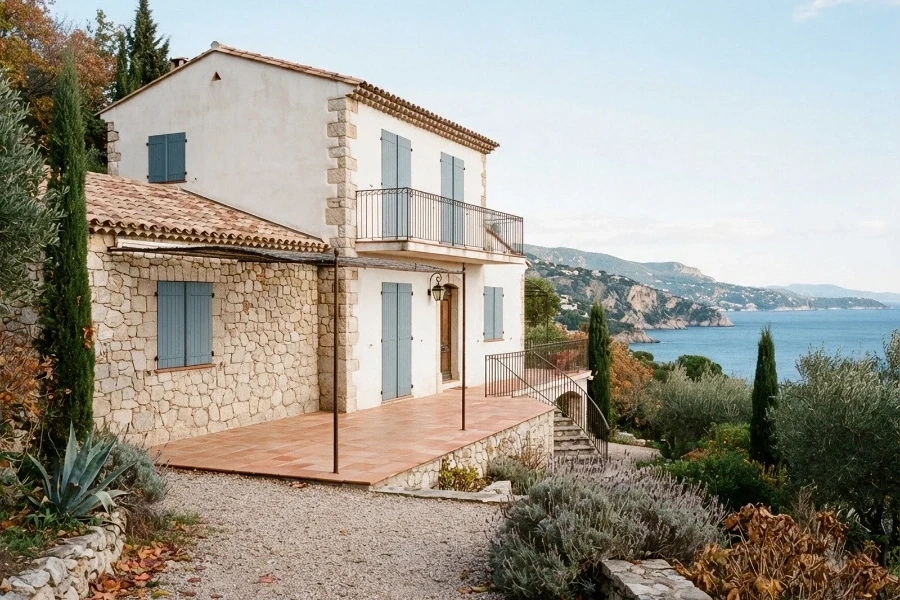
Some houses also provide excellent natural summer comfort thanks to their design. Stone houses, bioclimatic homes and well-insulated properties retain cool temperatures much more effectively, making summer thermal comfort an increasingly sought-after feature for homebuyers.
If you are not ready
to buy and move into a traditional stone house just yet, do not worry, there are plenty of ways to reduce indoor heat. Some require renovation work, while others are simple, affordable habits anyone can adopt. Here are the most effective solutions for keeping your home cool, with or without air conditioning.
1. Block the heat before it enters your home
2. Ventilate your home efficiently
3. Choose natural and eco-friendly cooling solutions
4. Renovations that permanently improve summer comfort
5. Simple tips that really make a difference
6. Is air conditioning really necessary?
FAQ – The best ways to keep your home cool
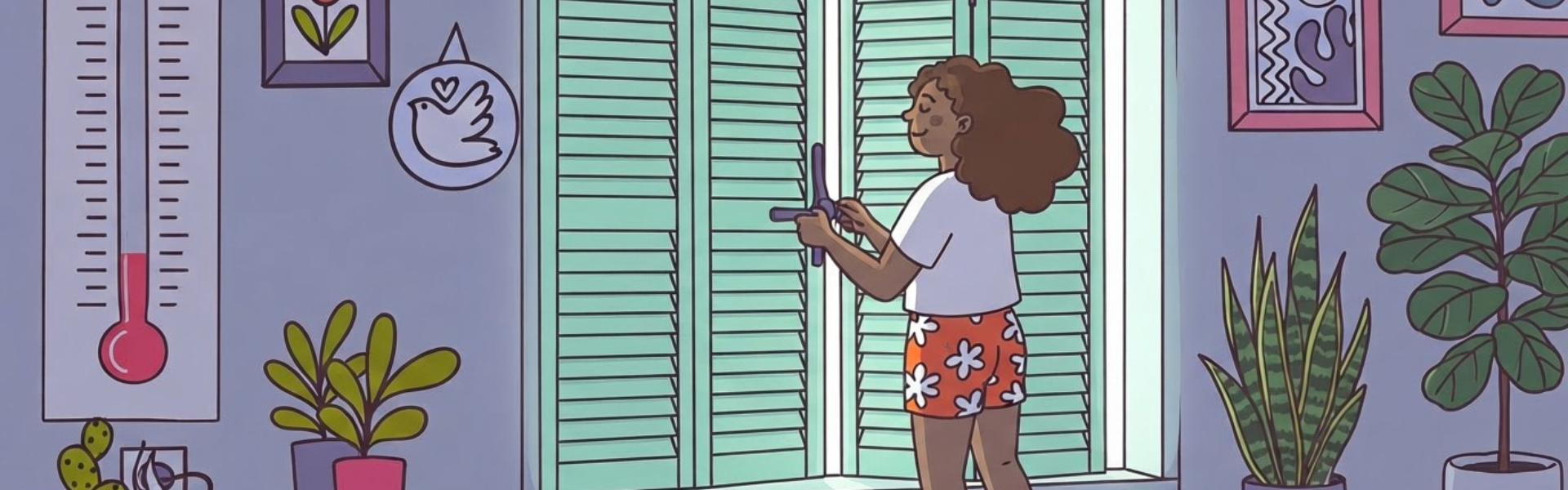
1. Block the heat before it enters your home
Most homes overheat because sunlight passes through the windows and gradually warms the interior surfaces. It is therefore far more effective to prevent heat from entering than to try cooling your home once it has already heated up.
External solar protection is by far the most effective option because it blocks the sun's rays before they reach the glass. By contrast, curtains installed inside only intercept part of the heat after it has already entered the room.
Depending on your budget, several options are available:
- Closing shutters as soon as the sun reaches the windows remains the simplest and most effective solution.
- Installing exterior blinds or retractable awnings protects large windows while still allowing natural daylight inside.
- Adjustable external louvers (brise-soleil), commonly found on contemporary homes, block direct sunlight while allowing both air circulation and daylight.
- Solar window films are an excellent alternative where shutters cannot be installed. They can reflect a significant proportion of the infrared rays responsible for indoor heat build-up.
- Thermal blackout curtains also improve comfort, although they remain less effective than external shading systems.
Another affordable solution, long used in commercial greenhouses, is making a comeback:
Meudon White (also known as
whiting or
chalk paint). This natural powder made from finely ground chalk is simply mixed with water and applied to the sunniest windows. Once dry, it forms a white coating that reflects part of the sun's radiation. Biodegradable and extremely inexpensive, it can significantly reduce heat inside conservatories or highly exposed rooms.
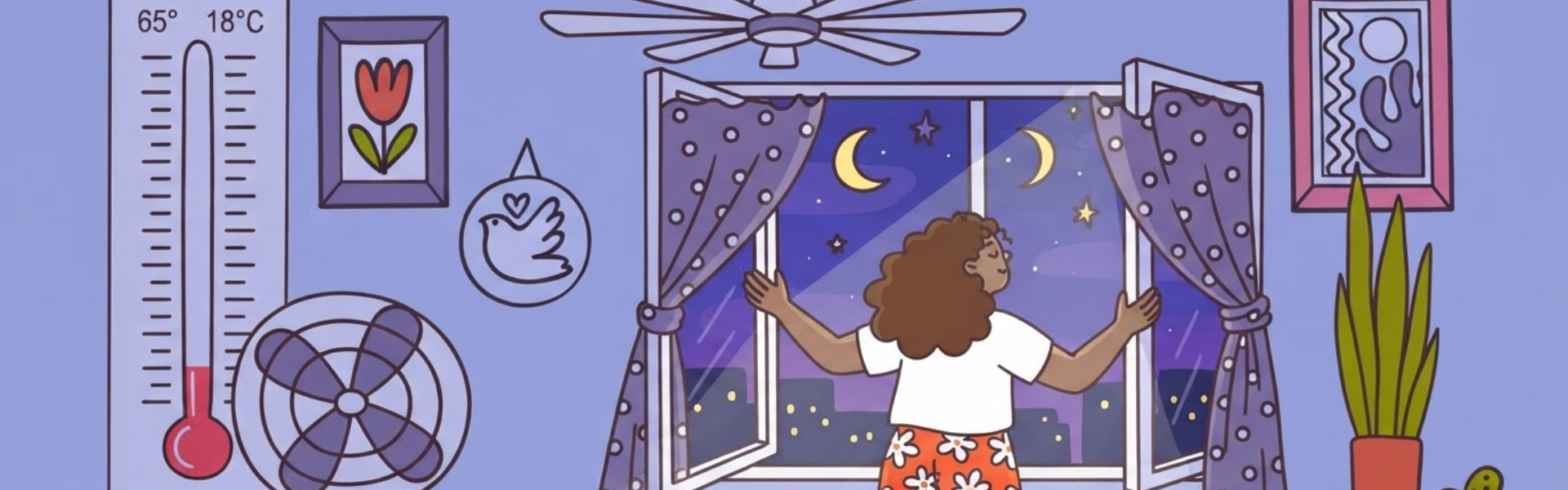
2. Ventilate your home efficiently
Good ventilation helps remove the heat accumulated throughout the day. The best time to
air your home is at night or early in the morning, when outdoor temperatures are lower than indoors.
Open windows on opposite sides of the house to create cross ventilation, then close them again as soon as the outside temperature begins to rise. On the other hand, leaving windows open during the hottest part of the afternoon, when outdoor air is warmer, only accelerates indoor heating.
Ceiling fans are among the most efficient and cost-effective cooling solutions. Although they do not lower the air temperature, they considerably improve thermal comfort by circulating the air while consuming very little electricity.
Portable pedestal fans and tower fans also perform well, especially when combined with a frozen water bottle or reusable ice packs placed in front of the airflow.
In detached houses,
attic exhaust fans can remove the heat trapped beneath the roof. Finally, some
heat recovery ventilation systems (MVHR) equipped with a
summer bypass use cool night air to naturally refresh indoor spaces without relying on air conditioning.
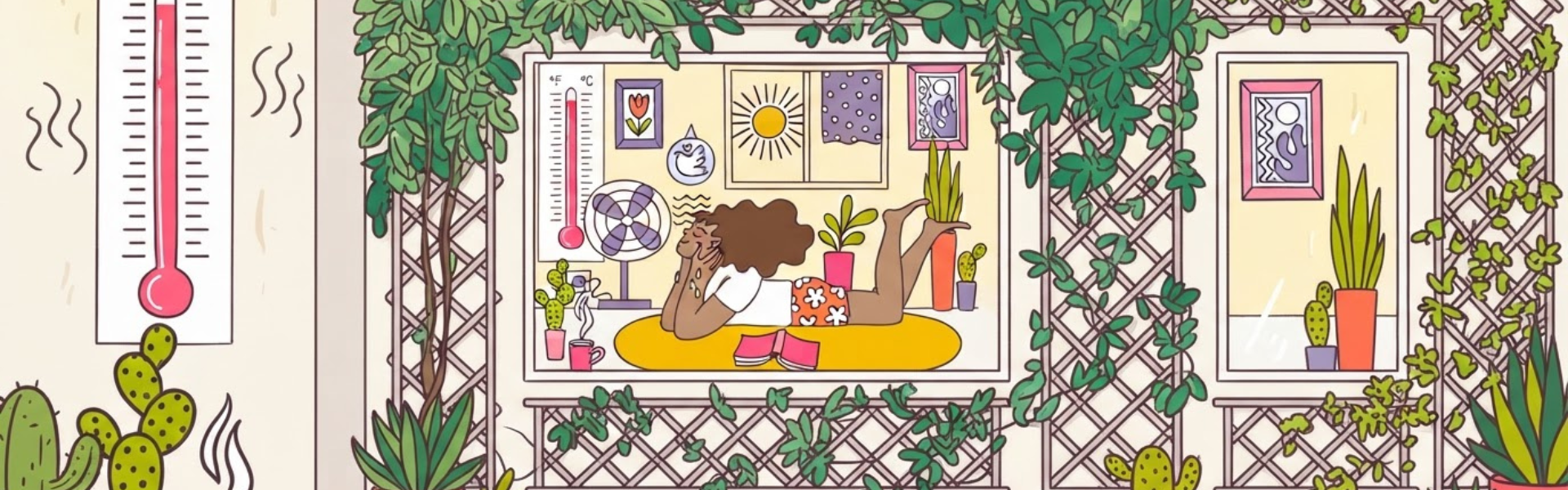
3. Choose natural and eco-friendly cooling solutions
Vegetation is one of the most effective natural ways to reduce heat around a home.
A deciduous tree planted on a south- or west-facing façade provides valuable shade during summer while allowing sunlight through in winter.
Climbing plants such as Virginia creeper or wisteria also reduce the amount of heat absorbed by exterior walls, while a pergola covered with vegetation effectively protects a terrace or large windows from direct sunlight.
Even without a garden, it is possible to create shade using
shade sails, reed screens or outdoor awnings.
For new builds or renovation projects, a
green roof can significantly improve summer comfort by reducing roof temperatures and promoting evapotranspiration. These landscaping solutions offer two major advantages: they lower the temperature around the house while also improving biodiversity and enhancing the overall living environment.
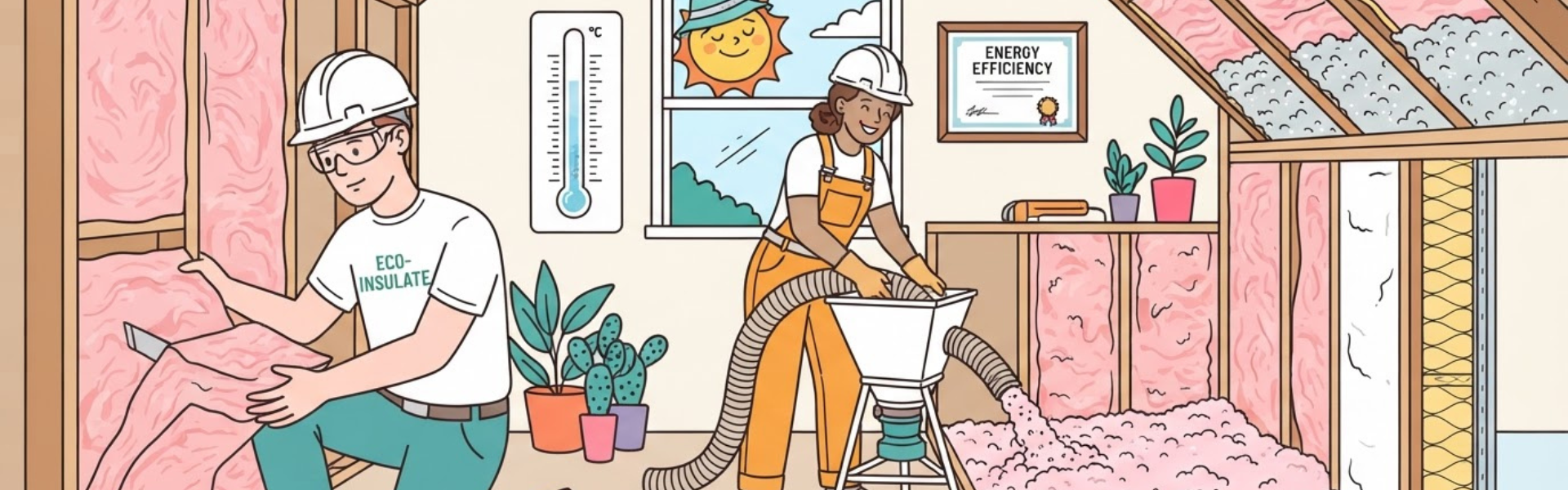
4. Renovations that permanently improve summer comfort
As heatwaves become more frequent, certain renovation projects can significantly improve indoor comfort while reducing energy consumption.
Good insulation does much more than retain heat during winter—it also slows down heat penetration during summer. Roof and attic insulation is often the most effective upgrade, but replacing old windows with solar-control double glazing or installing exterior shading systems also provides substantial comfort improvements.
Some highly efficient solutions remain relatively unknown to the general public.
This is particularly true of the
Canadian well, also known as an
earth tube or
ground-air heat exchanger. This passive system draws outside air through underground pipes before it enters the house. During summer, the hot air naturally cools as it passes through the cooler ground before being distributed indoors. During winter, the opposite process preheats incoming air, reducing heating needs.
Although mainly installed during new construction or major renovations, this completely passive technology provides excellent thermal comfort with extremely low energy consumption.
Another innovation gaining popularity is
reflective roof coatings, often referred to as
cool roofs. Applied to roofs or highly exposed façades, these coatings reflect a large proportion of solar radiation instead of absorbing it.
While a dark roof can exceed 70°C (158°F) during summer, a roof treated with reflective paint remains significantly cooler, reducing the amount of heat transferred into the home.
5. Simple tips that really make a difference
Beyond equipment and renovation work, a few simple everyday habits can help lower indoor temperatures during a heatwave.
Household appliances are among the main sources of heat inside a home. An oven, stovetop, tumble dryer or dishwasher can all generate a considerable amount of heat. Whenever possible, opt for cold meals or outdoor cooking, and run your appliances during the evening or overnight. It's also worth replacing old halogen bulbs with LED lighting, which produces far less heat, and switching off appliances instead of leaving them on standby.
The choice of fabrics also has an impact on thermal comfort. For bedding, natural materials such as
cotton and linen are ideal because they wick away moisture much better than synthetic fibres. During summer,
choosing light-coloured home textiles, including curtains, also helps reflect sunlight and reduces heat absorption.
Some traditional "grandmother's tips" are actually based on well-established physical principles. Among the most effective are:
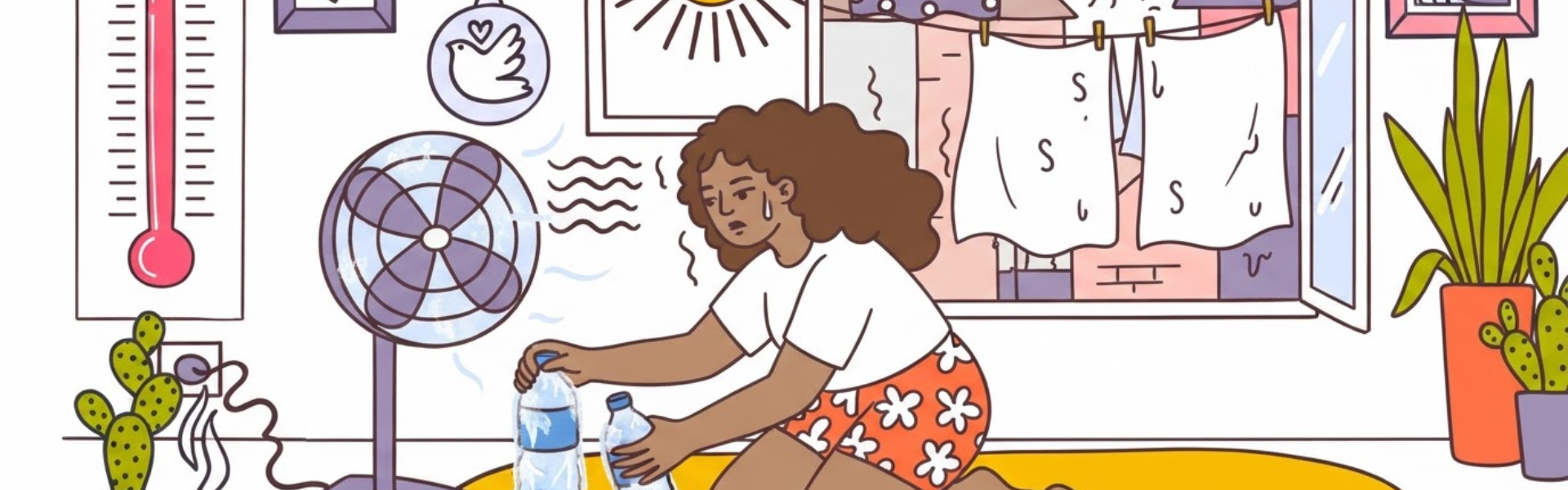
- Place a frozen bottle of water or an ice pack in front of a fan to circulate slightly cooler air.
- Lightly dampen a sheet and hang it in front of an open window only when the outdoor air is cooler and drier. As the water evaporates, it creates a refreshing cooling effect.
- Water a stone terrace, patio or courtyard in the evening. As the water evaporates, it absorbs part of the heat stored by the materials.
- Keep the doors of unused rooms closed to preserve cool air where you spend most of your time.
- Open the windows wide throughout the night and close them again early in the morning.
On the other hand, some common beliefs deserve clarification. Leaving a fan running in an empty room does
not reduce the room temperature—it simply moves the air while continuing to consume electricity. Likewise, opening windows when the outdoor air is hotter than the indoor air will only make your home heat up faster.
6. Is air conditioning really necessary?
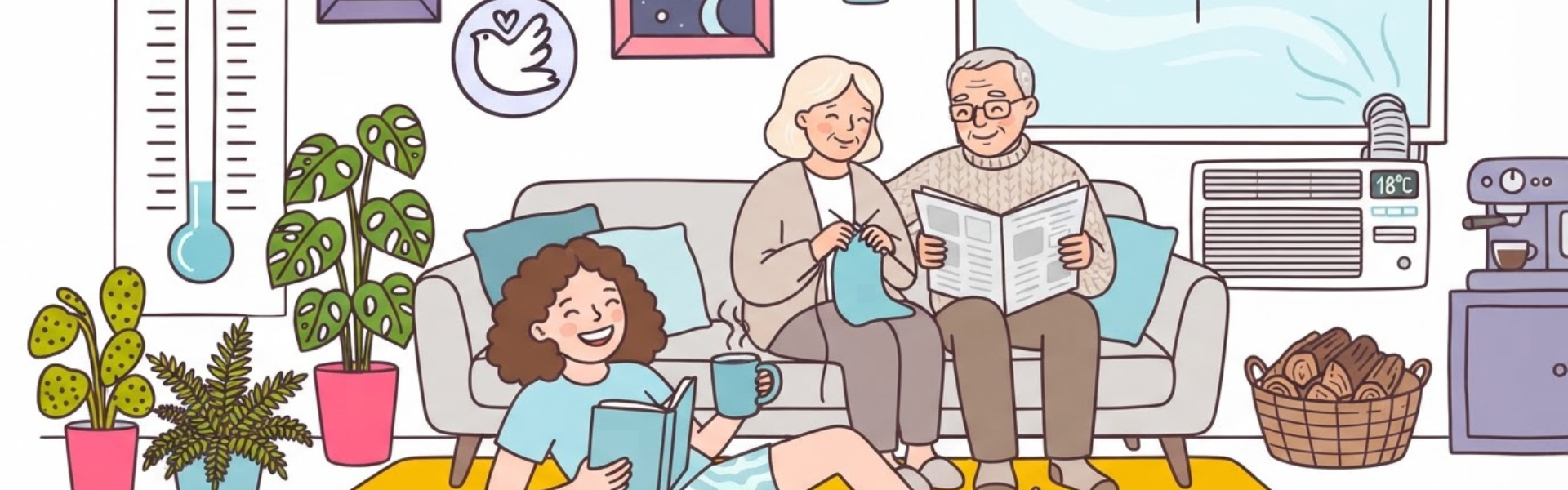
Although air conditioning remains the fastest and most effective way to lower indoor temperatures, it is not always essential. Purchase and installation costs, electricity consumption, maintenance requirements and restrictions imposed by certain condominium associations often encourage homeowners to consider alternative cooling solutions.
Moreover, an air conditioning unit installed in a house that is poorly protected from the sun will run for longer periods and consume significantly more energy.
In many situations, combining effective solar protection, good ventilation and high-quality insulation is enough to greatly improve summer comfort. Air conditioning then becomes a supplementary solution used only during the most intense heatwaves.
This approach not only reduces energy consumption but also keeps your home comfortable throughout most of the summer season.
Beyond equipment, the design of a house itself plays a major role. Traditional stone houses, known for their excellent thermal mass, as well as modern homes built to the latest insulation standards, naturally stay cooler during summer. This is a real advantage for everyday comfort and an increasingly desirable feature on today's real estate market.
FAQ – The best ways to keep your home cool
How can you cool your house without air conditioning?
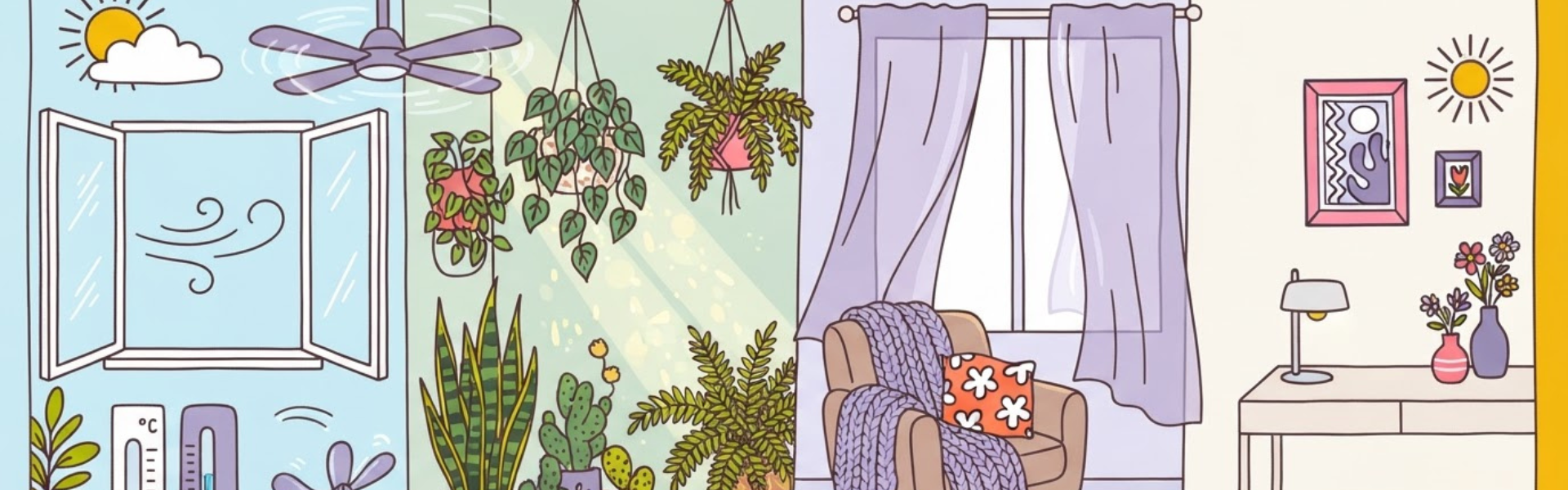
The most effective solution is to combine several strategies: prevent direct sunlight from entering your home, ventilate only when outdoor air is cooler than indoor air, use a ceiling fan and gradually improve insulation. In most cases, these combined measures lower indoor temperatures much more effectively than relying on a single piece of equipment.
Are ceiling fans really effective?
Yes. Although they do not actually cool the air, ceiling fans create air movement that significantly improves the feeling of freshness. They are also extremely economical to operate, typically consuming only 20 to 60 watts, far less than an air conditioning system.
Does Meudon White really work?
Yes, provided it is applied to the windows most exposed to direct sunlight. The thin white coating reflects part of the sun's radiation, helping to reduce indoor heat build-up. Easy to apply and remove, it is an inexpensive and environmentally friendly solution.
Which renovation projects are most effective against heat?
Roof and attic insulation generally provide the greatest improvement, followed by exterior solar shading, replacing older windows and, in some cases, applying reflective roof coatings. These upgrades also improve your home's energy efficiency during winter.
Is a Canadian well (earth tube system) worth the investment?
Mainly considered during new construction or major renovation projects, a Canadian well provides outstanding thermal comfort while consuming very little energy. However, its cost-effectiveness depends on factors such as the type of land, the local climate and installation costs.
Despite all these practical tips, are you still looking for the perfect home where you can enjoy every summer in complete comfort?
Discover a wide selection of seaside homes and exceptional properties on Meretdemeures.com:
You may also be interested in:
Tuscan style: the trendy décor inspiration for your home
Renovating a coastal property: the smart way to buy a home in France for Less
Buying a house for €1 in Italy: how does it work?
Health, real estate... The advantages of living by the sea
Smart homes and friendly technology
The Tiny House from the USA: outbuilding or mini-residence?